
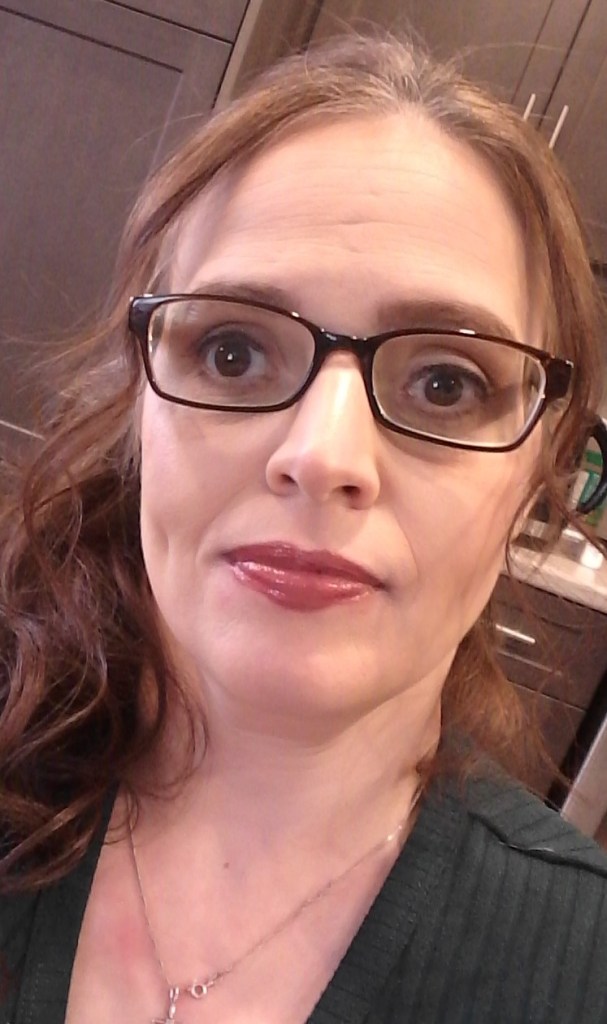
In October, 2021, my daughter was diagnosed with Small Bowel Crohn’s Disease (SBCD).
When our medical staff first delivered and discussed her diagnosis, I felt numb – and suddenly, hollow.
I felt a heartbreaking surge of all that had occurred in weeks previous, leading to this moment.
I caught my breath, in the stream the tears on my cheeks.
Simultaneously, I felt a sense of relief, that we now had a diagnosis.
I vowed to be strong. For my daughter. And for our family.
From the beginning, our family banded together, to help my daughter begin to navigate her path, to living well with Crohn’s disease.
Crohn’s Disease: Treatment and Management
Our Crohn’s journey has been lengthy, and arduous. But ours is also a story of triumph.
Our experience has underscored our capacity to remain fiercely strong and unconditionally united – to help my daughter through her diagnosis, her timeline of treatment(s), and hospitalizations.
From the outset, the presentation my daughter’s Crohn’s, and its path – were determined to be unusually complex.
Together as a family, we researched and discussed a breadth of treatment approaches for Crohn’s, to help manage my daughter’s symptoms. And we discussed our findings, and thoughts on these, with our healthcare team.
Because Crohn’s is such an individual disease, partnered with the immediacy with which it must be treated – our mission was fast-paced. Immediately upon diagnosis, discussions began with our medical team – alongside paperwork, and a lengthy list of appointments, blood draws and other testing. A schedule was set for MRI and CT scans, and follow-up. It was so much all at once, and for a long time, it seemed never-ending.
And there were times when it seemed we were at a standstill – as with every treatment introduction, change, or stage of treatment, necessitated a “wait and see” approach.
My daughter’s treatment timeline is extensive and complex. There was an eight-week, Modulen-exclusive (IBD formula drink) diet. Then, we opted to try the very specific, and strictly regimented Crohn’s exclusion diet (CDED). She did well on this regimen for quite some time. Steroids were also fixed into the course of her treatment, at various points, with differing types and doses. Ultimately though, her Crohn’s treatment necessitated a shift to biologics.
We tried several biologics for my daughter. There were times when we saw improvement in her symptoms, alongside evidence of reduced inflammation. But these positive signs, unfortunately, quickly receded.
She has had a myriad of complications along her treatment timeline. We have spent many days and nights in our local and out-of-town emergency rooms – and my daughter had many in-patient hospital stays, both in and out-of-town.
She has had abscess drainage procedures, an intestinal resection, and a seton placement.
At some points we were so on edge, and expectant about having to head to an emergency room, scan or other short-notice appointment, at any given time.
For the summer months in 2023, my daughter stayed in hospital. She began a Total Parenteral Nutrition (TPN) regimen, as her Crohn’s treatment required bowel rest.
She was still in pediatrics at this time. As with her hospital stays preceding this one – I stayed in-hospital with her, for the duration.
Following this seven-week stay, my daughter unfortunately experienced further complications.
These complexities necessitated a period of in-home nursing care, intravenous (IV) medicine administration, and a Peripherally Inserted Central Catheter (PICC) line. Fortunately, she was able to return to school during this time, while utilizing a portable IV pump.
Finding a Path Forward with Crohn’s Disease
The road to a workable, longer-term treatment course for my daughter has by no means been without obstacles. There are many key things we learned along our journey.
Our family always understood that Crohn’s – as with any disability or condition (and the ability opportunity manage it effectively, and to live well), is so much more than the diagnosis itself. We understand that a diagnosis involves critical considerations connecting one’s physical, emotional and mental health and wellbeing.
Alongside a cohesive, communicative and receptive medical team, I strongly believe that advocacy – and self-advocacy – are critical keys. It is so important for one to have a voice – and that one’s voice is heard, genuinely listened to, and clearly understood.
At age 17, my daughter was able to begin making decisions regarding her healthcare.
I support and encourage my daughter to access and utilize her voice – to assert and advocate for herself, and for others – while supporting others, in their efforts to access and utilize their own voice.
And advocacy will remain important, as and since my daughter has transitioned to the “adult world”, concerning her Crohn’s treatment, and overall care.
Upon starting our Crohn’s journey, we discovered how and why research is also a critical key, and from reputable sources.
A clear understanding of the disease and its individuality is crucial – partnered with knowledge and a clear understanding of available treatments (including their effectiveness, and each one’s possible side effects, as examples), and the processes involved in accessing these.
Our family is grateful to those whom we have spoken to along our journey, who live with Crohn’s. They have so openly shared their Crohn’s experiences and knowledge with us.
We appreciate and express our gratitude for the love and support of our family, and our closest friends – for extending their support and love to us, through some very difficult times.
I am so incredibly proud of my daughter – for all that she has endured, and overcome.
Now, more than three years since the initial diagnosis, we are now on the other side of her Crohn’s disease.
She is currently on a biologic that is working well for her.
In November 2024, her scan images showed healthy intestinal tissue.
My daughter has achieved clinical remission.
She has started University, and she is well on her way to achieving a career about which she is passionate.
Perhaps you – or a family member, a loved one or friend – may be at a challenging juncture on a journey with Crohn’s.
You can, and you will, get to that other side.
For more information and resources concerning Crohn’s disease, you can connect with Crohn’s and Colitis Canada.
Stay positive. Stay strong. Ask questions, and advocate.
Sources
Crohn’s and Colitis Canada. Biotherapies. https://crohnsandcolitis.ca/About-Crohn-s-Colitis/IBD-Journey/Treatment-and-Medications/Biotherapies. January 27, 2025.
Crohn’s and Colitis Canada. https://crohnsandcolitis.ca/. January 27, 2025.
Crohn’s and Colitis Foundation. Overview of Crohn’s Disease. https://www.crohnscolitisfoundation.org/patientsandcaregivers/what-is-crohns-disease/overview. January 27, 2025.
Jessen Hickman, Ruth, MD. Total Parenteral Nutrition (TPN) and How It Works. Giving Nutrition Through The Veins. Very well health. https://www.verywellhealth.com/total-parenteral-nutrition-uses-methods-side-effects-5184974. January 27, 2025.
The Mayo Clinic. Peripherally inserted central catheter (PICC) line – Mayo Clinic. January 27, 2025.

 Welcome to Mindset!