The Pet Connection

By Brandy Duchesne

Are you a lover of animals?

A pet owner?

There are many benefits to bringing a pet into your home, and sharing their environment(s).

For the Love of Our Pets

Our family has always welcomed cats into our home.

Each one of our cats has had distinct a personality and characteristics. And we have always welcomed them into our home readily, as members of our family.

Near the end of November 2023 – around the time of his annual health exam and vaccines – our then 15-year-old cat, Hemi, had been having digestive health concerns, partnered with rapid weight loss.

Following his examination, it was recommended that we put him on a round of antibiotics, while changing his diet and monitoring his weight.

In additional testing, Hemi’s bloodwork showed abnormalities in both his red and white cell counts.

A few days before Christmas in 2023, an ultrasound revealed that Hemi had Lymphoma. And the ultrasound showed that it had progressed to all of his organs.

At that time (weight loss aside), Hemi’s behaviour and mannerisms were normal. Until this diagnosis, Hemi interacted and played as a younger feline might, rather than a 15-year-old. He was mobile and agile, he was still enjoying his food and toys, cuddling – and getting into some funny mischief. He was stable, and happy. But that changed, soon after.

We were doing our best to process this news, and we were staying strong – for Hemi, and for our family. We were supporting Hemi in all the ways that we could – while loving him like crazy (then, and always) – and we were deeply appreciating our time together.

Taking more pictures.

Making more memories.

And practicing gratitude, daily.

We took things one day at a time, and we were determined to support Hemi, through all that was to come. We were, and we still are, in awe of Hemi’s courage and determination, throughout his last few months of life.

And we knew when it was time for our last goodbye.

We will always remember Hemi.

 We remember his quirky personality and character, his mischievousness, and his gentle and sweet ways. We are grateful and blessed to have brought him – and his adopted feline brother Jet, who had also passed on, a few years before – into our home, and into our lives.

To love and care for Hemi, and to be able to protect him. We have so many memories – and we’ll always cherish our incredible bond.

There is always the inevitable goodbye.

And then, there is an opportunity to bond again, with a pet(s).

The Pet Connection, And Its Benefits

Whether we connect with animals as we choose them to be our pets – or whether we form a bond with pets who are owned or cared for by friends, or others – we are affected by time spent in an animal’s environment.

Pet ownership, and sharing an environment with animals, has many benefits.

Among these, are therapeutic and physiological benefits for vulnerable or unwell individuals. Service assistance and support for people with various types of disabilities and conditions, and the elderly. Companionship, affection – and a unique recognition and honouring of individuals’ physical and emotional needs and wishes.

Our pets can also infuse humour into situations, if and as they discover newness and opportunity in their environments, and as they are presented with chances for human connection.

Loving, And Bonding with Our Pets Again, After Loss

In November of 2024, our family was offered the opportunity to bring two, then two-month-old kittens, into our home.

It had been years since I had had the chance to raise cats from babies – but it has been a wonderfully sweet opportunity.

A gift.

Our hearts were still (and always) missing Hemi.

But we also know that he would not want us not to have another chance to bring the love of these so shy and vulnerable kittens into our home.

Our kittens are biological siblings – brother and sister named Lyric and Autumn. It is touching to watch them together – to witness their interactions, and seeing that they are inseparable.

It is true, of course, that young cats require more involved care, in a lot of ways. Time and attention. Play time, and sharp attention to their safety.

Their surroundings and their discoveries are still so new to them.

Lyric and Autumn bring us so much joy.

At September’s end, our kittens turned one year old.

And what a contrast since they first arrived. They are learning and growing, as we are learning about and further bonding with them.

And we hope that they will be with us for a very long time.

The Pet Connection Is A Bond Like No Other

To bond and connect with our pet(s), is an opportunity that can bring out the best – in both our pet, and its owner, and others around them.

 Our pet(s) of choice can also differ from the more common or popular cats or dogs.

There are a wide range of pets, and pet owners whom I know – including those who own and care for dogs as well as cats, birds, a snake, rats, hamsters and guinea pigs, and rabbits.

These pets also provide support and companionship, and an opportunity to form cherished bonds.

No matter the options or choice of pet – the ways in which we bond with our pets is unlike any other.

Sources

https://pawscanada.ca/benefits-of-pets/#:~:text=The%20presence%20of%20a%20companion,chemicals%20that%20boost%20positive%20emotions. Benefits of Pets. October 6, 2025.

https://mcpress.mayoclinic.org/healthy-aging/boost-your-health-the-benefits-of-having-a-pet/ Boost your health: The benefits of having a pet. October 6, 2025

https://newsinhealth.nih.gov/2018/02/power-pets. News is Health. The Power of Pets. Health Benefits of Human-Animal Interactions. October 6, 2025.
The Employment Challenge, And Individuals With Disabilities

By Brandy Duchesne

The employment landscape has changed dramatically, and within a relatively short period of time.

Since the onset of the Coronavirus pandemic, alongside technological progression, and changing infrastructural and workforce demands – the world has met with much change – and amplified challenges.

Hours of work, work roles, employee availability expectations, access to training and development – are among a deluge of concerns, and points for consideration, in today’s employment picture.

Additionally, with the implementation of tariffs, viable employment options are increasingly scarce.

And the employment challenge is ever more complex for individuals with disabilities.

Facing of Adversity, and Additional Roadblocks

Job seekers with disabilities are increasingly positioned on the periphery of employment opportunities. 

Workday hours, transportation, physical accommodations, and attitudinal barriers are among the concerns of individuals and potential employees with disabilities.

Individuals with disabilities are often excluded from performing the duties required for certain types of jobs, given their physical or other challenges.

And so often, potential employers will make it clear that “the duties required for the work role(s) cannot be modified…”

What do all of these factors mean for an induvial with a disability, in the face of these challenges, when the already limited scope of their employment picture is dismal?

Searching for Viable and Progressive Employment

I have been out of the workforce now for over three years.

My child has a chronic health issue(s). I am her primary support person.

Now that my child’s condition has stabilized, I have restarted my job search – with every intention and determination to return to the workforce.

Not unlike so many job seekers, finding a suitable job posting to apply for seems an insurmountable task.

In resuming my employment search, I’ve been reflecting upon past employment searches, and my work experiences.

Alongside the nerve-wracking, and so often disheartening, interview process.

I have experienced a myriad of scenarios in my job search journey(ies) over the years – scenarios that often have left me confused, disappointed and – a few times – speechless.

I know that I am not alone in these experiences.

When employment support staff “don’t know what to do with you”, they might recommend an individual connect with a disability organization, “as they may have job postings”.

A workplace interviewer might suggest that one should return to school, for further, and “more relevant” education.

Even as they are reviewing one’s resume – and realizing that the potential candidate has successfully completed both a college diploma, and a university degree – with numerous courses successfully completed, in between.

And understanding that this extensive education is partnered with a notable employment history – demonstrative of a quick study, and a keen, continuous learner – with a desire to work.

An employment support staff might suggest that volunteer work is a “more viable” option – even as they clearly understand that the individual is in search of a paid employment opportunity.

I once experienced an instance where, when I applied for a job, the potential employer called my home, and asked me “…why would an intelligent, well-educated, clearly overqualified person like yourself, want to work in a job like this?”

When the economy challenges us, we often will apply for jobs that we may be overqualified for.

Would this individual have singled out an ablebodied person in this way?

Would this potential employer have understood that a job seeker with a disability was interested in said opportunity – just as other applicants, regardless of whether or not they were ablebodied, or living with a disability?

Would the potential employer welcome a candidate with a disability into their work environment – where the individual would embrace and excel in a long term employment opportunity – together with a possibility of growing professionally, within the business or organization?

Individuals with disabilities often feel sidelined, within their workplace environment(s).

The goal, the desire, and the drive is often simply – that one could be a part of a progressive work environment, where their skills were being utilized and recognized.

A work environment in which their contributions are demonstrably acknowledged, and proactively communicated among their co-workers.

A work environment they are truly valued, and genuinely included – regardless of their position within the business or organization.

The Employment Search Can Be Arduous. Persevere

My challenges in finding employment will not diminish my determination to find viable, challenging and progressive employment opportunities.

In sharing experiences, my objective is not to come down on or take sides with one group or another.

Nor is it to ignore the concerns of employers themselves, nor others within their work environment(s).

And I would never intend to dismiss the reality that finding work is a challenge for every job seeker – whether one is ablebodied, or living with a disability.

Continued and proactive awareness of what is happening in the workforce will empower individual job seekers – alongside their efforts, challenges and successes.

Issues concerning employment for individuals with disabilities – and others – must be revealed, communicated, and addressed, from all perspectives.

Beginning the discussion will encourage more extensive and ongoing dialogue and viewpoints from all stakeholders – and proactive steps.

A stronger economy, to include stronger, more cohesive communities – is something that we are all responsible for.

And by  working together to uncover and/or create opportunities for viable, progressive and sustainable employment, we can strengthen our communities – and, in turn, one another….regardless of (dis)abilities.

Sources

https://accessible.canada.ca/centre-of-expertise/employment. Government of Canada. “Employment”. September 26, 2025.

https://www.ontario.ca/page/hire-people-disabilities. “Hire People with Disabilities. ” September 26, 2025

https://www.chrc-ccdp.gc.ca/sites/default/files/publication-pdfs/ottawaiti7-2565385-v7-report_on_employment_and_persons_with_disabilitie_final-s.pdf Roadblocks on the career path: Challenges faced by persons with disabilities in employment. Canadian Human Rights Commission. September 26, 2025

https://smith.queensu.ca/insight/content/Why-Dont-We-Hire-People-With-Disabilities.php “Why Don’t We Hire People with Disabilities?’ by Angela Kryhul | Nov 14, 2026 .Queen’s University Smith School of Business. September 26, 2025.

A Crohn’s Journey

In October, 2021, my daughter was diagnosed with Small Bowel Crohn’s Disease (SBCD).

When our medical staff first delivered and discussed her diagnosis, I felt numb – and suddenly, hollow.

I felt a heartbreaking surge of all that had occurred in weeks previous, leading to this moment.

I caught my breath, in the stream the tears on my cheeks.

Simultaneously, I felt a sense of relief, that we now had a diagnosis.

I vowed to be strong. For my daughter. And for our family.

From the beginning, our family banded together, to help my daughter begin to navigate her path, to living well with Crohn’s disease.

Crohn’s Disease: Treatment and Management

Our Crohn’s journey has been lengthy, and arduous. But ours is also a story of triumph.

Our experience has underscored our capacity to remain fiercely strong and unconditionally united – to help my daughter through her diagnosis, her timeline of treatment(s), and hospitalizations.

From the outset, the presentation my daughter’s Crohn’s, and its path – were determined to be unusually complex.

Together as a family, we researched and discussed a breadth of treatment approaches for Crohn’s, to help manage my daughter’s symptoms. And we discussed our findings, and thoughts on these, with our healthcare team.

Because Crohn’s is such an individual disease, partnered with the immediacy with which it must be treated – our mission was fast-paced. Immediately upon diagnosis, discussions began with our medical team – alongside paperwork, and a lengthy list of appointments, blood draws and other testing. A schedule was set for MRI and CT scans, and follow-up. It was so much all at once, and for a long time, it seemed never-ending.

And there were times when it seemed we were at a standstill – as with every treatment introduction, change, or stage of treatment, necessitated a “wait and see” approach.

My daughter’s treatment timeline is extensive and complex. There was an eight-week, Modulen-exclusive (IBD formula drink) diet. Then, we opted to try the very specific, and strictly regimented Crohn’s exclusion diet (CDED). She did well on this regimen for quite some time. Steroids were also fixed into the course of her treatment, at various points, with differing types and doses. Ultimately though, her Crohn’s treatment necessitated a shift to biologics.

We tried several biologics for my daughter. There were times when we saw improvement in her symptoms, alongside evidence of reduced inflammation. But these positive signs, unfortunately, quickly receded.

She has had a myriad of complications along her treatment timeline. We have spent many days and nights in our local and out-of-town emergency rooms – and my daughter had many in-patient hospital stays, both in and out-of-town.

She has had abscess drainage procedures, an intestinal resection, and a seton placement.

At some points we were so on edge, and expectant about having to head to an emergency room, scan or other short-notice appointment, at any given time.

For the summer months in 2023, my daughter stayed in hospital. She began a Total Parenteral Nutrition (TPN) regimen, as her Crohn’s treatment required bowel rest.  

She was still in pediatrics at this time. As with her hospital stays preceding this one – I stayed in-hospital with her, for the duration.

Following this seven-week stay, my daughter unfortunately experienced further complications.

These complexities necessitated a period of in-home nursing care, intravenous (IV) medicine administration, and a Peripherally Inserted Central Catheter (PICC) line. Fortunately, she was able to return to school during this time, while utilizing a portable IV pump.

Finding a Path Forward with Crohn’s Disease

The road to a workable, longer-term treatment course for my daughter has by no means been without obstacles. There are many key things we learned along our journey.

Our family always understood that Crohn’s – as with any disability or condition (and the ability opportunity manage it effectively, and to live well), is so much more than the diagnosis itself. We understand that a diagnosis involves critical considerations connecting one’s physical, emotional and mental health and wellbeing.

Alongside a cohesive, communicative and receptive medical team, I strongly believe that advocacy – and self-advocacy – are critical keys. It is so important for one to have a voice – and that one’s voice is heard, genuinely listened to, and clearly understood.

At age 17, my daughter was able to begin making decisions regarding her healthcare.

I support and encourage my daughter to access and utilize her voice – to assert and advocate for herself, and for others – while supporting others, in their efforts to access and utilize their own voice.

And advocacy will remain important, as and since my daughter has transitioned to the “adult world”, concerning her Crohn’s treatment, and overall care.

Upon starting our Crohn’s journey, we discovered how and why research is also a critical key, and from reputable sources.

A clear understanding of the disease and its individuality is crucial – partnered with knowledge and a clear understanding of available treatments (including their effectiveness, and each one’s possible side effects, as examples), and the processes involved in accessing these.

Our family is grateful to those whom we have spoken to along our journey, who live with Crohn’s. They have so openly shared their Crohn’s experiences and knowledge with us.

We appreciate and express our gratitude for the love and support of our family, and our closest friends – for extending their support and love to us, through some very difficult times.

I am so incredibly proud of my daughter – for all that she has endured, and overcome.

Now, more than three years since the initial diagnosis, we are now on the other side of her Crohn’s disease.

She is currently on a biologic that is working well for her.

In November 2024, her scan images showed healthy intestinal tissue.

My daughter has achieved clinical remission.

She has started University, and she is well on her way to achieving a career about which she is passionate.

Perhaps you – or a family member, a loved one or friend – may be at a challenging juncture on a journey with Crohn’s.

You can, and you will, get to that other side.

For more information and resources concerning Crohn’s disease, you can connect with Crohn’s and Colitis Canada.

Stay positive. Stay strong. Ask questions, and advocate.

Sources

Crohn’s and Colitis Canada. Biotherapies. https://crohnsandcolitis.ca/About-Crohn-s-Colitis/IBD-Journey/Treatment-and-Medications/Biotherapies. January 27, 2025.

Crohn’s and Colitis Canada. https://crohnsandcolitis.ca/. January 27, 2025.

Crohn’s and Colitis Foundation. Overview of Crohn’s Disease. https://www.crohnscolitisfoundation.org/patientsandcaregivers/what-is-crohns-disease/overview. January 27, 2025.

Jessen Hickman, Ruth, MD. Total Parenteral Nutrition (TPN) and How It Works. Giving Nutrition Through The Veins. Very well health. https://www.verywellhealth.com/total-parenteral-nutrition-uses-methods-side-effects-5184974. January 27, 2025.

Keeping a Positive Mindset in Challenging Times

Have you pondered the impact of thinking positively?

How do you define positivity, and the mindset of ‘positive’, for yourself?

There are times in life – while in the throes of its ebb and flow – when we reflect on the past and present, and the current trajectory of our lives.

I am a deep-thinking person, with an analytical mind – and I often make time for reflection, and self-reflection.

Unequivocally, the past cannot be changed.

There is only today. There is now.

Time for reflection, and contemplation, helps me to move progressively forward, and to maintain a positive mindset.

The Impact of Thinking Positively, as Life Moves Forward

Everyday life continues for all of us, amid challenges, and unforeseen circumstances.

The Coronavirus pandemic, at its height, and throughout – has brought so much upon all of us. And its consequences have perpetuated unprecedented, multi-tiered and multi-faceted worldwide change.

We are left to recover, and to begin anew. And with so much change – next to the continual and far-reaching fallout, our rebuilt landscape seems fragile, and it is always evolving.

We are constantly and consistently refamiliarizing ourselves with this strange and daunting terrain. And this continues to be a catalyst for reflection.

Still, life has carried on, inevitably.

The holiday season again brings time and opportunity for reflection. Christmas and other holidays are not always easy, and this can weigh heavily upon our hearts and minds.

It is a reminder that there are things we can do to encourage and to maintain a positive attitude. And it will radiate to, and positively impact, those around us.

It can be unsettling – to establish, and re-establish our lives – and to find stable, and then forward-moving footing.

We have all confronted and risen from the depths of hard times.

Employment challenges, food and security concerns, turbulent relationships and family dynamics…

The multitude of stressors that we must contend with, work through, and resolve in our lives, is complex and continual.

There are likely experiences, and periods of time in our lives that we regret, and thus might never want to repeat. Contemplating them might needle feelings of discontent, confusion, and a sense of loss, perhaps.

Our trials and our turmoil are among our best teachers.

Changing Our Mindset to Think Positively

Thinking positively impacts – and can be profoundly impacted by – one’s physical, emotional and mental health. And when one thinks positively, it radiates to others, and influences their emotions and general mindset, positively.

We all have positive, and challenging days. And sometimes it might take a little bit of time to change our mind frame. And it can be difficult at times, to not let our challenges overshadow our efforts to settle into a positive mindset.

Do you have daily routines that help you to maintain your positive mindset?

Practising gratitude, engaging in meditation, listening to music, writing, a health and fitness regimen, time with friends and family, or a beloved pet(s)…

The possibilities are vast. And you might find one, or a few of these opportunities that resonate, to help you reconsider your outlook.

And remember: You are not alone.

Almost daily – on weekday mornings – I share a positive thought, or a quote – alongside a song from my playlist, and sometimes an anecdote, on Facebook.

My morning posts are benign. They are authentically me, as I share my thoughts and feelings in the moment, as I post. I do get comments on my daily posts – as others may find the simple everyday happenings and perspectives relatable. And I appreciate that my thoughts and words resonate.

I try to infuse positivity into my day, and I hope that it might have an encouraging effect for others, as well.

It is true, I believe – that seemingly small or inconsequential things can have a notable and lasting influence upon our ability and motivation to adjust our mindset.

Through time, and experience, life evolves, as it is meant to. Thinking positively, and maintaining an optimistic mindset, can certainly be a challenge. And at times, it may seem a near impossibility.

Life’s challenges can be a catalyst for optimism.

Sources

https://www.verywellmind.com/benefits-of-positive-thinking-2794767 . Benefits of Positive Thinking for Body and Mind. December 10, 2024.

https://www.healthline.com/health/how-to-think-positive#tips. How to Think Positive and Have an Optimistic Outlook: 8 Tips. December 10, 2024.

https://www.businessinsider.com/guides/health/mental-health/how-to-think-positive. How to Think Positive: 7 Science-Backed Tips. December 10, 2024.

Are you an “Empty Nester”?

This image has an empty alt attribute; its file name is ginas-pic-jan-28-edited-5.jpg

Our newly-minted empty nest is a trial to navigate, and my husband and I are working through this experience, and this shift, together.

The reality of our ‘empty nest’ seemed to arrive abruptly. Whether one is ready for this transition, we reminded ourselves – it is inevitable, and necessary.

It is life changing.

Adjusting to The Empty Nest

My daughter has worked hard and has been dedicated to her studies, throughout her educational career. She is set on a path to higher education – and toward a career plan about which she is passionate.

My husband (he is also her stepdad) and I could not be prouder. She is keen, and on a good track.

September neared, signaling her move-in date, alongside the start of first term – and time seemed to accelerate. And the day came when my husband helped my daughter to move her things into her residence unit.

The short ride to the university felt like an intractable stretch.

And when she exited the car and came around to my side of it for a hug – I held her, and I cried.

My sadness persisted for the first three weeks, but then I was able to drop her off at her residence building, with a strong and reassuring hug, and a goodbye – and with no tears.

Logically, of course, I knew that we would see her often, and that she would be home with some regularity.

I’ve reflected upon my reaction in those first weeks, following her move – and my realization that my emotional response arose from another place. Redefining my feelings, while searching inwardly, changed my perspective.

It is not sadness that I felt initially, not solely.

It was a feeling of my own raw vulnerability – partnered with my pride, and pure love for my child – and a sense of awe.

As I watched her walk from the car to the doors of her residence, there was a definiteness to it. But there was also that thrill, an elation – a certainty that she is indeed on the threshold of a new beginning.

I felt joyful.

It was in knowing that “she’s got this”.

That her foundation was solid and strong. And that it was time.

The Backdrop to Our Empty Nest Experience, and Beginning Again

The backdrop to our empty nest experience involves unforeseen circumstances, and finally reaching a workable resolution.

My daughter has a long-standing, chronic health concern.

We bonded together as a family, in our search for answers, to achieve a diagnosis, and an appropriate treatment course. In the beginning, it was like time stopped, and our lives were forced into a holding pattern. It has been an arduous and heartbreaking three-year stretch.

Her stepdad and I are proud of her for everything she has been through – and we have successfully traversed a difficult journey. She is finally on a smoother road.

My daughter is feeling well and strong, and more confident with each day – and she is again on a forward move toward her goals.

We are excited to see how her future unfolds, as it happens.

In our individual lives, and as a family unit, the last three years have provided us with challenges – but also, with the opportunity to begin again.

Embracing Change, and Opportunity, in the Empty Nest

The thing that I realized most immediately on my daughter’s first day in residence was the silence in our now empty nest.

I moved through the house then, while breathing slowly, and deeply. This is a new start, I told myself. It is a new start for all of us. We will be ok. And this will be ok.

I’ve read upon what’s been termed the “Empty Nester’s Syndrome”.

It had crossed my mind some years ago – when university life, acclimatizing to it, and any changes around it, seemed more years away.

There are positives to it, despite the challenge of the empty nest adjustment.

I recently spoke with a friend about missing my daughter, and how my husband and I were missing her, and adjusting to her absence, in those first days after she moved into her residence unit. And I reflected again upon this – and on how keen she is, to launch into her future.

My daughter is creating and shaping her own path. She is finding her way.

My husband and I are navigating these strange, yet exciting waters. We’re making and experiencing changes in our own lives. And we are again finding our place in her life, amid this transition. We’re embracing the opportunity to witness my daughter’s growth and change – and how we will inevitably grow and evolve as people – as our familial connection evolves.

We have had some growing pains in this process – and surely, there will be ups and downs to come.

When my daughter comes home each week, she is sometimes exhausted, while communicating that she is overwhelmed. But she’s making progress, and I know that she is still on the right track.

She has more responsibility – with tasks like grocery and supply shopping, cleaning, studying and time management, time for self-care and social activities. And she is determined – while experiencing life, and learning more about herself in this process, and with time.

We still resist the urge to do ‘too much’ for her – and we are careful about too quickly pronouncing our perspectives on how or why she might do things. This is a learning experience for all of us.

And I know she will come to us for emotional support, and advice. We trust, and we have faith in her, in this time of learning and so much change.

We trust in our bond.

Time Does Not Stop in The Empty Nest

What will I do with all of the time I have now?

It is time to rebuild my life, in some ways, I suppose.  

Time to re-establish myself in the workforce. Time for investigating and reconsidering hobbies and interests, for enjoying time with friends, and in our individual lives.

My husband and I are also navigating changes and opportunities in our relationship.

Forming and fostering connections and opportunities is important. And this is true for all of us, at any and all stages of our lives.

And in beginning again – there is much to be celebrated and appreciated.

Sources

https://www.drrachelglik.com/blog-posts/2023/9/4/empty-nesting-the-upsides-downsides-and-tips-for-a-fresh-start-mindset. Empty Nesting: The Upsides, Downsides and Tips for a Fresh Chapter Mindset — Dr. Rachel Glik. November 13, 2024.

https://www.theguardian.com/lifeandstyle/2022/sep/15/it-struck-me-like-a-thunderbolt-how-to-survive-empty-nest-syndrome-and-come-out-smiling. ‘It struck me like a thunderbolt’: how to survive empty-nest syndrome – and come out smiling | Parents and parenting | The Guardian. November 13, 2024.

https://www.merriam-webster.com/dictionary/empty%20nester. Merriam Webster Dictionary. November 13, 2024.

https://www.mayoclinichealthsystem.org/hometown-health/speaking-of-health/how-you-can-enjoy-the-empty-nest. The Mayo Clinic Health System. November 13, 2024.

What Motivates You to Get Moving…And to Keep Moving?

What motivates you to get moving, and to stay active?

Health and wellness connect the moving and evolving elements of one’s physical, emotional and mental health.

Everyone is different, as are our motivations for examining and defining the terms health and wellness – and for staying active.

Your mission to stay active might involve activities that you accomplish as you succeed in your everyday living activities – perhaps partnered with community participation. Or you may have initiated an individualized, more structured and regular fitness routine.

Whatever works for you – it’s about staying active.

You may be living with a disability, or an existing condition, or you may have another health concern. This will inevitably affect or alter your approach to your health and active living goals. You can create and modify a routine that works for you.

By adapting, you can further empower and motivate yourself, along the pathway to your active living objectives.

Stay active and stay well – on your own terms.

Reflecting Upon My Own Health And Wellness Journey, And Staying Active

My perspective on staying active, on my own health and wellness journey, and concerning my overall well-being, has certainly evolved, particularly throughout the last few years.

Aging – partnered with my mission to maintain my whole health, and my independence – are key areas of concern for me.

I have a life-long, permanent disability, Cerebral Palsy. I use a manual wheelchair for my main mobility assist – for safety, and for covering distances. I’m able to walk for very short distances, using a walker.

I do not take my mobility, nor my independence, for granted.

I am now almost 52 years old. I want to continue to age well, with my disability.

At the onset of the Coronavirus pandemic, in 2020, and when we were in lockdown(s), I reflected on the ways I could stay active and positive, and well – amid the unknowns of the pandemic, and as it wore on.

I wanted to get moving, and to find ways to keep moving.

I began a regular, daily fitness routine.

My fitness routine connects time on my seated elliptical, with my daily “Island Tours”. My “Island Tour” refers to my short walk – a few minutes at a time, a few times throughout each day – when I walk with my walker, around our home’s kitchen island.

I also utilize five-pound weights for abdominal muscle strengthening, for a few minutes each day.

Meeting And Overcoming Challenges to Stay Active, And to Keep Moving

My pursuit of my optimal health and activity, and the road to my achievement of these goals, is not without challenges.

When I first began working out on my seated elliptical, I had a sore knee – almost immediately, and often – for the first few weeks. I was concerned that I might not be able to continue to use my elliptical then, and I was disheartened. But I kept at it – while still embracing the challenge. With intervals of rest, and trying (and trying again), I found a resistance and time set, that worked for me.

With sometimes painstaking slowness, I increased my time on the seated elliptical – from five or ten minutes to 20 minutes daily. These days, I’m able to cycle steadily and effectively, for up to an hour each day.

This regimen was one that I began just as the pandemic was coming down, and I have kept on with it.

One goal that I have set for myself – and it is one that I have achieved, is a four-hundred-metre walk.

I set a goal to walk around a local track in our community, utilizing my walker. I don’t walk outside on my walker, to protect my safety – except when I complete this walk. And I don’t walk on this track alone, again, concerning safety.

For me, walking takes a lot of mental energy and focus, alongside the physical energy I expend. It is not just about the literal placement and movement of my feet – one in front of the other – as this does not “automatically” happen for me, as it might for an able-bodied individual, for example.

I am exceptionally slow-going on my trek – walking a short distance at a time and resting frequently. I am incredibly, although happily, tired after completing a walk on the track – but I feel a tremendous sense of accomplishment at my finish line.

Motivation, And Staying Active

At times in our efforts to stay active, we need to encourage our motivation.

This happens to all of us.

There may be days when you might feel that your energy is not up to its optimal level.

When you’re not feeling your usual level of energy or motivation to complete your activities and routines, take a break, or time for reflection. Know that you can always modify your strategy – with an approach that works for you.

And you can keep moving. 

Listening to, and moving with, music is always helpful for me, when I feel a bit of slide in my energy level and motivation.

Have you a stay-active playlist, or a treasured song?

You know the kinds of songs I’m describing. You might be keen on a tune (or perhaps, several) with those catchy, kept-in-your-head lyrics.

Or maybe your choice playlist celebrates a few of those generational ‘anthems’ that we all know, and love.

Your favourite music and lyrics can help you to stay active, while reminding you that you are strong, and capable – and resilient.

And that you can.

And this might just motivate you to start – and then, to begin again. On completing your next task or goal. Or on taking your next step, that will lead to the next. And you will actively move closer to your proverbial, or literal, finish line.

Staying Active, And Recognizing Self-Care

There are a multitude of influences that can affect one’s health and wellness, and active living objectives.

Self-care considers several key elements in caring for aspects of your health.

Self-care can include things like alone time or meditation, journalling or reading, and time with friends and family. Prioritizing rest is also a critical key to self-care.

Your self-care opportunity might include participation in community activities – perhaps pairing with someone, or joining a group that you connect with, in your efforts to stay active, while reaching your health and wellness goals.

It’s worth checking into wellness resources, and investigating ways to stay active and well, in your community.

Final Thoughts

We all have our important and very individual reasons for setting goals, towards achieving and maintaining our optimal health, and staying active.

And no matter what your experiences and interests, abilities, or level of mobility – there are options to peruse – to help you keep moving.

Sources

https://ala.ca/. Active Living Alliance for Canadians with a Disability. November 4, 2024

https://cmha.ca/news/self-care-simplified-why-its-essential-and-how-to-make-it-happen/. Canadian Mental Health Association. November 4, 2024

https://www.participaction.com/programs/. Participaction. November 4, 2024

https://www.psychologytoday.com/ca/blog/natural-standard/201306/music-therapy-health-and-wellness. Psychology Today. November 4, 2024.

https://www.regionofwaterloo.ca/en/health-and-wellness/physical-activity.aspx. Region of Waterloo, November 4, 2024.

Hello, and welcome to Mindset!

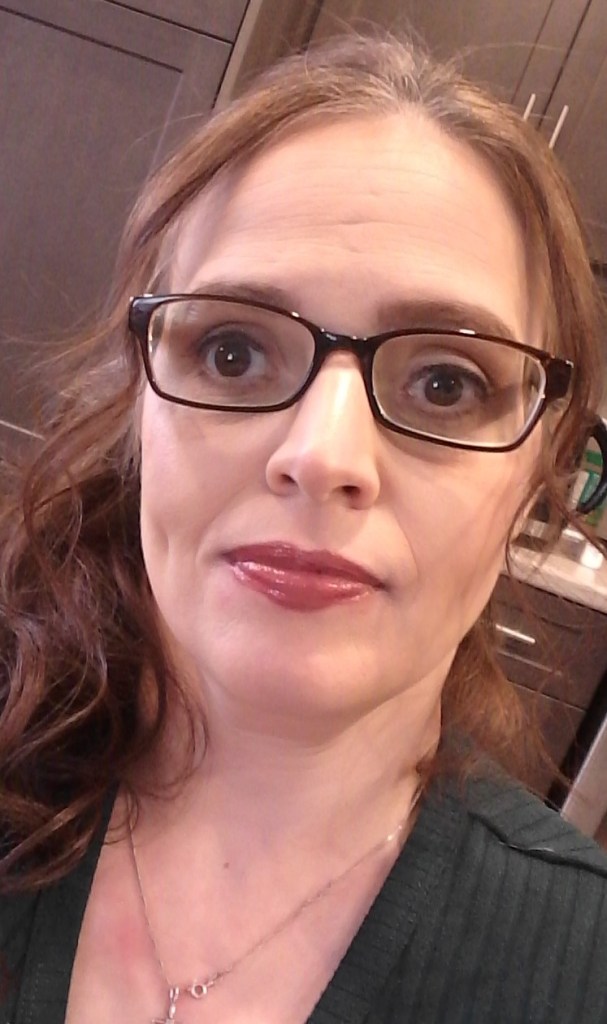
Hi, I’m Brandy, and welcome to my Mindset blog!

I am keen on sharing thoughts and perspectives, and fostering connections.

I strive every day to keep an encouraging outlook, and a positive mindset – while recognizing that this is a work in progress.

I enjoy sharing a positive quote or thought, or an anecdote, that might resonate with others. I hope that my words might encourage a spark of positivity for others, as well.

In many ways – in my life, and on my life’s path, at present – I am beginning again.

I have a passion for helping others – and a desire to assist organizations and businesses that support, advocate with and for, and promote awareness of persons with disabilities, youth and seniors, and other vulnerable groups and our community.

I have many years of experience both working and volunteering within our local community’s not-for-profit sector, and in the private sector, as well. In most of my work roles, I’ve worked in administrative office environments – many of which are connected to promoting awareness of and providing support to individuals with disabilities, and other minority groups.

I hold a diploma in Radio & Television Broadcasting (with Radio Specialization) from Conestoga College, and a BA in Sociology, from the University of Waterloo. I have completed a wide and diverse range of stand-alone, college-level courses as well.

While utilizing my knowledge, skills and abilities, talents and experiences, I want to continue to encourage and support individuals and organizations, in their efforts to connect.

I’m passionate about advocacy, and community participation. I believe strongly that our community – and the individuals within it – are made stronger and more cohesive, when we support and learn from one another, as we draw upon, and share our strengths, and our challenges.

I’ve worked as writer, an editor and a  proofreader, for a range of projects.

My work and skillsets include providing feedback to students (at the highschool, college and university levels) concerning academic writing, content development for a range of promotional materials, articles to help promote awareness of individuals with disabilities, and to bring important issues to the forefront.

I have written articles and human-interest pieces for a variety of not-for-profit, consumer and organizational publications. I have also written website content – including online content writing utilizing Search Engine Optimization (SEO) Principles.

I have self-published three collections of verse, entitled “Unveiled in Verse” (2013), “Wordplay” (2014), and “No Stranger Times: Contemplation Amid the Coronavirus Pandemic” (2021).

I’ve completed additional personal and creative writing projects, as well.

I appreciate that you have taken the time to visit and read my Mindset blog.

And I hope that readers will find my experiences relatable – and that perhaps others will feel encouraged and welcome, to share and relate their own perspectives and life experiences, challenges and successes.